If a Narcissist Hates You, Can You Do Anything About It?
Let’s be honest—when someone with strong narcissistic traits turns on you, it doesn’t just sting. It destabilizes the relational field. And even as experts, we’re not immune to the pull of that question: Did I trigger something? Is there a way to repair this?
What I’ve come to believe—both clinically and personally—is that narcissistic hatred is rarely about the target in any straightforward sense. It’s about structural regulation. When a narcissistic system experiences injury, shame, or loss of control, it reorganizes. Sometimes that reorganization takes the form of devaluation so intense it feels like hatred.
The real question isn’t “Why do they hate me?”
It’s: What function does their hatred serve in maintaining their psychic equilibrium?
Once we look there, the options—and the limits—become much clearer.
What Narcissistic Hatred Is Actually Doing
It’s a Stabilization Strategy, Not Just an Emotion
I think we often underestimate how quickly a narcissistic personality reorganizes under threat. We talk about injury and shame conceptually, but in real time, the shift can be almost surgical.
A client sets a boundary.
A colleague challenges a decision.
A partner expresses disappointment.
And suddenly, the narrative flips.
I’ve seen this repeatedly: admiration collapses into contempt in what feels like minutes. But if you look closely, the hatred isn’t random. It’s regulatory.
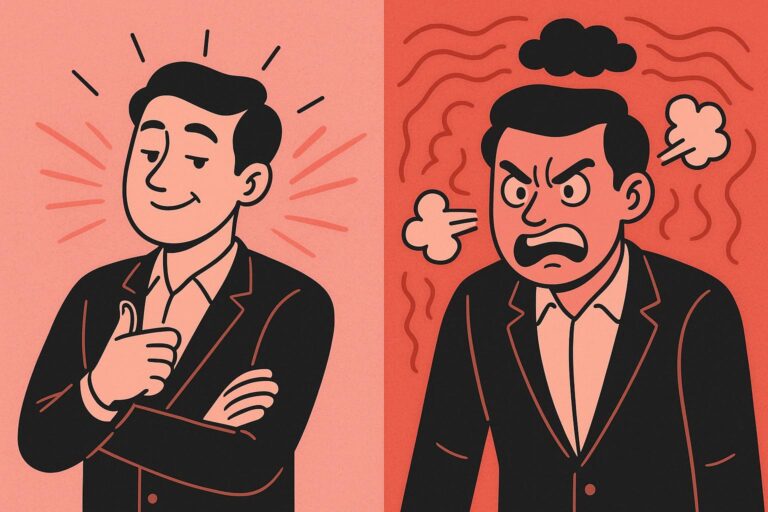
When the grandiose self is punctured, shame floods in. That shame is intolerable. So the psyche does what it must: externalize, project, devalue. The object becomes defective, malicious, incompetent. And just like that, the narcissistic self is restored to coherence.
What fascinates me—and I don’t think we talk about this enough—is how hatred often functions as a fast-acting anesthetic against shame. It’s not just defensive; it’s metabolically efficient. Rage restores vitality. Contempt restores hierarchy.
From the inside, it probably feels like clarity.
Devaluation Is a Repair Mechanism
We’re used to conceptualizing idealization and devaluation as relational instability. But I’ve started thinking of devaluation less as instability and more as emergency repair.
If an admired colleague suddenly outperforms the narcissistic individual publicly, what happens?
In healthy narcissism, there’s envy, maybe motivation.
In fragile narcissism, there’s collapse.
To prevent that collapse, the psyche downgrades the threatening object.
I once consulted on a corporate case where a senior executive turned viciously against a direct report he had previously mentored. The trigger? The protégé received public recognition from the board. Within weeks, the executive began privately questioning the protégé’s integrity, suggesting ethical shortcuts, implying instability.
Was it hatred? On the surface, yes. But structurally, it was something else. The protégé had become a mirror reflecting inadequacy. The only way to survive that reflection was to shatter it.
The hatred restored asymmetry.
And that’s the part I think even seasoned clinicians sometimes miss: the devaluation isn’t about destroying you. It’s about restoring psychic order.
Splitting Protects Against Ambivalence
We all understand splitting conceptually. But when you’re on the receiving end, it’s destabilizing because you remember the earlier idealization.
This is where experts can get hooked.
We think, “But we had depth. There was mutuality. They trusted me.” And sometimes that’s true—within the limits of their organization.
The problem is that ambivalence requires object constancy. If I can’t hold “you disappointed me” and “you’re still valuable” at the same time, one representation has to die.
Hatred simplifies.
Contempt clarifies.
Total devaluation removes the cognitive dissonance of mixed feelings.
I’ve seen this play out in clinical supervision contexts. A supervisee with strong narcissistic traits idealizes a supervisor—brilliant, wise, transformative. The first serious critique lands. Within days, the supervisor is “outdated,” “rigid,” “threatened by talent.”
Nothing gradual. Just a clean split.
What’s happening isn’t moral failure. It’s structural incapacity to integrate injury without annihilating the object.
Envy Is Often the Hidden Engine
Let’s talk about envy. Not the casual kind—the Kleinian, corrosive kind.
In my experience, the most intense narcissistic hatred emerges when the target embodies something the narcissistic person unconsciously longs for but cannot access without shame.
Emotional regulation.
Authentic confidence.
Moral authority.
Independence.
I worked with a couple where the husband displayed vulnerable narcissistic traits. His wife had done significant trauma work and had developed real emotional boundaries. The more grounded she became, the more hostile he grew. He began accusing her of being “cold,” “superior,” “unloving.”
Clinically, it looked like rage. But underneath, it was envy of her regulation. She represented a developmental milestone he hadn’t integrated.
Here’s the uncomfortable insight: when you grow, you can become intolerable to someone who relies on you staying smaller.
Hatred, in that context, is an attempt to destroy the envied quality—or at least to discredit it.
Control Is the Last Line of Defense
Finally, we can’t ignore attachment dynamics. Many narcissistic systems are organized around control as a substitute for mutual regulation. When attachment security is low and shame sensitivity is high, control becomes the stabilizer.
So what happens when you assert autonomy?
You’re no longer regulating them.
You’re no longer predictable.
You’re no longer fully available as supply.
Hatred often erupts precisely at the moment of separation or individuation.
I’ve seen smear campaigns begin not after conflict—but after quiet withdrawal. When the target disengages calmly, without drama, it threatens the narcissistic system’s control. The response? Character assassination.
From the outside, it seems disproportionate.
From the inside, it’s panic management.
What I want us to notice, as experts, is this: narcissistic hatred is rarely about moral judgment or even sustained emotional experience. It’s structural triage.
If we see it that way, the question shifts.
Not “How do I make them stop hating me?”
But “What would have to happen inside their structure for that hatred to no longer be necessary?”
And that’s where things get complicated.
What You Can Actually Do About It
Now we get to the part everyone secretly wants: strategy. And I’ll be upfront with you—most interventions fail not because they’re poorly executed, but because they misunderstand the function of the hatred.
If hatred is structural triage, then trying to eliminate it without addressing the underlying threat is like asking the psyche to give up its emergency oxygen mask.
So the real question becomes: where do you actually have leverage?
Repair Is Possible, But Rare and Conditional
Let’s start with the uncomfortable truth. Repair can happen—but only under specific structural conditions.
In my experience, three variables matter:
- The narcissistic individual must have some reflective capacity.
- The injury must be survivable without total ego collapse.
- Status must be preservable.
If you’re dealing with high-functioning grandiosity with intact cognition and some ego strength, there’s room for calibrated repair. I’ve seen it in executive coaching contexts. A leader feels publicly challenged, lashes out privately, and then—if approached carefully—can recalibrate.
But the approach has to be precise.
Direct confrontation framed as moral correction will almost always backfire. What sometimes works is reframing the rupture around shared goals and status preservation.
For example, instead of “You unfairly attacked me in that meeting,” something like:
“I’m aligned with you on the outcome. I think we may have had a misfire in the way it landed publicly. I’d love to make sure we’re reinforcing your strategic direction next time.”
Notice what’s happening there. You’re not surrendering your reality. But you’re removing shame as the dominant variable.
Even then, though, repair is often temporary if the underlying structure remains fragile. That’s the part we don’t say out loud enough.
Strategic Neutrality Is Underrated
I’ve grown increasingly convinced that neutrality is one of the most powerful tools in these dynamics.
Not coldness. Not withdrawal as punishment. Just procedural interaction.
When narcissistic hatred is activated, it’s often seeking friction. Any strong emotional response—defensive, angry, pleading—feeds the regulatory loop.
I once worked with a department head who became the target of a narcissistic peer’s escalating hostility. Every slight was bait. The department head’s breakthrough wasn’t winning the argument. It was shifting into logistical-only communication:
- No emotional tone.
- No reactive energy.
- No public sparring.
- Everything documented.
Within months, the hostility lost momentum. Not because the narcissistic colleague had insight—but because the interaction stopped offering narcissistic fuel.
You can’t stop someone from hating you. But you can starve the interaction of reinforcement.
That distinction matters.
Boundaries Work Differently Here
We talk about boundaries constantly, but with narcissistic structures, boundaries aren’t about mutual respect. They’re about containment.
A clear boundary with a healthy person invites dialogue. A clear boundary with a fragile narcissistic system often invites escalation—at least initially.
So the goal isn’t to convince them your boundary is reasonable. The goal is consistency.
No long explanations.
No emotional over-clarifying.
No defending your right to exist.
In legal, corporate, and family systems, I’ve seen one thing consistently reduce chaos: predictable consequences. Not dramatic ones. Just reliable ones.
If abuse occurs, the meeting ends.
If defamation occurs, documentation escalates.
If hostility continues, access narrows.
And this is where I’ll say something that might sound blunt: you are not negotiating emotional maturity. You are adjusting the cost structure.
That shift alone changes how much energy people waste trying to educate someone who cannot metabolize shame.
Sometimes the Only Move Is Exit
There’s a point in certain cases—particularly when envy and control are primary drivers—where intervention becomes self-destructive.
If hatred has escalated into smear campaigns, coercive dynamics, or chronic destabilization, staying engaged often reinforces the very system you’re trying to manage.
We see this in family estrangement cases. We see it in high-conflict divorces. We see it in organizational politics.
The fantasy is: “If I just explain clearly enough, show enough empathy, improve myself enough, they’ll stop.”
But if hatred is stabilizing their internal world, your improvement may intensify it.
Exiting—emotionally or structurally—is sometimes the only way to stop participating in the regulatory loop.
That’s not defeat. It’s differentiation.
What Changes and What Doesn’t
Here’s where I want to push us a little.
As experts, we pride ourselves on intervention. But there are structural realities we need to respect.
What Rarely Changes
Core narcissistic organization does not shift because someone becomes more patient with it.
Shame sensitivity remains high.
Envy remains volatile.
Ambivalence remains fragile.
Control remains central.
You can temporarily soothe. You can temporarily repair. But unless the individual is engaged in long-term depth work—and genuinely motivated—the architecture stays intact.
And I say that not cynically, but clinically.
I’ve followed cases longitudinally. When insight work happens and there’s authentic commitment, change is possible. But that change is slow, destabilizing, and often resisted.
In the absence of that, what looks like improvement is usually environmental adaptation.
What Actually Does Change
Now here’s the part that matters more than we admit: you change.
Your reactivity can change.
Your exposure can change.
Your participation in supply cycles can change.
And those changes profoundly alter the relational dynamic.
I’ve watched clients move from frantic self-justification to calm detachment. The narcissistic hatred didn’t vanish overnight—but it lost its grip.
There’s something powerful that happens when you stop trying to be reinstated as “good” in someone else’s split representation.
You reclaim coherence.
The Hidden Trap for Experts
Let me say something that may hit close to home.
Experts are particularly vulnerable in these dynamics.
Why?
Because we believe we can understand our way out of them.
We analyze the attachment wound.
We name the defense.
We empathize with the shame.
And sometimes that empathy keeps us entangled longer than necessary.
Understanding the structure does not obligate you to tolerate its impact.
That distinction has changed how I work—and how I live.
The Core Reframe
If a narcissist hates you, the most destabilizing assumption is that you caused it in a way that you can fix through self-adjustment.
Sometimes you did trigger an injury. That’s human. But injury does not require hatred as a response. That’s structural.
So instead of asking:
“How do I make them stop hating me?”
Try asking:
“What part of me still wants reinstatement inside their idealization?”
That’s where the real work lives.
Final Thoughts
If a narcissist hates you, you can sometimes influence the surface behavior. You can adjust the reinforcement loops. You can tighten boundaries. You can exit.
But you cannot reorganize someone else’s defensive architecture for them.
What you can do—powerfully—is refuse to become the container for their shame.
And in my experience, that shift changes everything that actually matters.