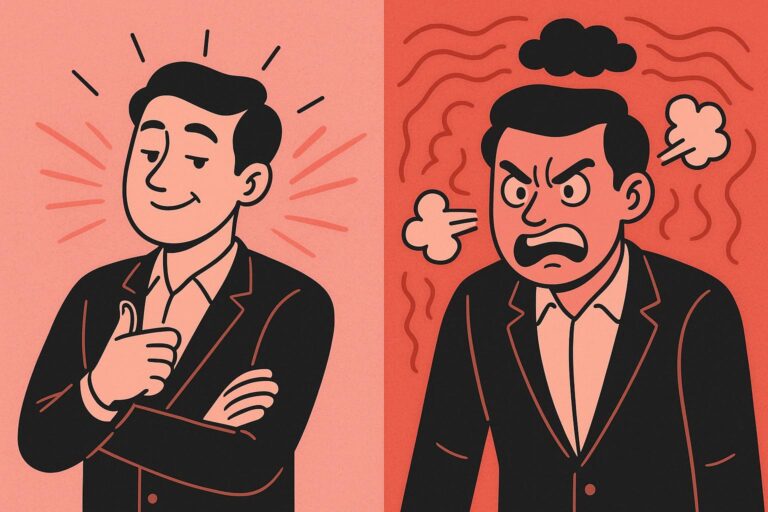
Narcissism and Empathy: Do They Go Hand in Hand?
For a long time, we’ve treated narcissism and empathy like oil and water. If someone is narcissistic, the assumption goes, empathy must be fundamentally impaired. But the more I sit with the data—and with real-world cases—the less convinced I am that this binary framing holds up.
I’m not suggesting that narcissism is secretly prosocial. What I am suggesting is that we may have been asking the wrong question. Instead of “Do narcissists lack empathy?” I think the sharper question is “What kind of empathy, under what conditions, and toward whom?” When we disaggregate empathy into its cognitive, affective, and motivational components, the picture becomes far more nuanced—and honestly, far more interesting.
If anything, I’ve come to see narcissism not as an empathy void, but as an empathy regulator—selective, strategic, and deeply context-sensitive.
What Do We Mean by Empathy?
Before we even talk about narcissism, we have to get precise about empathy. I know this is old ground for most of you, but the conceptual slippage still matters. Too often, studies collapse empathy into a single self-report score and then conclude narcissists “lack empathy.” That’s a category error.
The Three Pieces That Actually Matter
When I break it down for myself, I keep returning to three components:
Cognitive empathy
This is perspective-taking, theory of mind, mental state inference. It’s the ability to accurately model another person’s beliefs, desires, and intentions.
Affective empathy
This is emotional resonance. Feeling with someone. The embodied mirroring of another’s distress or joy.
Empathic concern
This is the motivational piece—the desire to alleviate another person’s suffering. It’s where empathy turns into prosocial action.
Here’s where it gets interesting: narcissism doesn’t seem to hit all three equally.
Grandiose narcissism, in particular, often shows intact—and sometimes quite sharp—cognitive empathy. I’ve seen this in leadership contexts. A CEO high in grandiose traits can read a room with almost surgical precision. They know who feels insecure, who wants status, who needs validation. That’s not an empathy deficit. That’s sophisticated social cognition.
What’s often reduced is affective resonance and, more reliably, empathic concern. The capacity to understand doesn’t necessarily translate into caring.
And that difference matters.
Different Narcissisms, Different Empathy Profiles
We can’t lump all narcissism together. The empathy profile of grandiose narcissism looks very different from vulnerable narcissism, and collapsing them muddies the waters.
Grandiose narcissism
With grandiose presentations, I see a pattern of:
- Intact or elevated cognitive empathy, especially in status-relevant contexts
- Reduced affective resonance, particularly when another’s distress threatens the narcissist’s self-concept
- Highly selective empathic concern
- Empathy deployed instrumentally
The instrumental piece is where I think we still underestimate things. Take political communication. A narcissistic candidate may publicly display grief after a tragedy, using precisely calibrated language that resonates with voters. The cognitive empathy is there—they know what will land emotionally. But the behavior is less about alleviating suffering and more about impression management.
In lab settings, this shows up in discrepancies between performance-based theory of mind tasks and self-reported empathic concern. Narcissistic individuals can pass false-belief tasks or accurately infer emotions from subtle facial cues, yet score lower on measures of compassionate motivation. That divergence is not noise. It’s signal.
Vulnerable narcissism
Vulnerable narcissism complicates things further. Here, we often see:
- Heightened emotional reactivity
- Strong sensitivity to perceived rejection
- Self-focused distress in response to others’ suffering
- Difficulty regulating empathic arousal
What looks like empathy can quickly become ego-threat amplification. For example, when a colleague receives criticism, a vulnerable narcissist may appear deeply affected. But the internal narrative often revolves around, “What does this mean for me?” or “Am I next?” The distress is real—but it’s self-referential.
So instead of a clean empathy deficit, we see empathic dysregulation. The emotional system activates, but it collapses inward.
The Role of Ego Threat
If there’s one moderator I think deserves more attention, it’s ego threat.
Empathy in narcissism appears profoundly contingent on whether the target’s experience enhances or threatens the self. When someone’s vulnerability allows the narcissistic individual to adopt a rescuer role, empathic engagement can be surprisingly robust. It feeds self-enhancement.
But when another person’s suffering highlights the narcissist’s inadequacy—or competes for attention—empathic withdrawal or even hostility can emerge.
I’ve seen this dynamic in academic environments. A narcissistic faculty member may enthusiastically mentor a struggling student when the interaction reinforces their identity as indispensable. But when a peer receives recognition, that same faculty member may show striking emotional indifference—or subtle undermining. The cognitive empathy doesn’t disappear. The motivation shifts.
This suggests that empathy isn’t absent; it’s gated by self-regulatory goals.
Public Versus Private Contexts
Another pattern that fascinates me is the public-private split.
In highly visible settings, narcissistic individuals often display empathic signals with remarkable fluency. Public philanthropy, emotionally attuned speeches, carefully curated social media responses to global crises—these are not signs of incapacity. They’re signs of selective activation.
Privately, when reputational stakes are low, empathic concern may drop off. The asymmetry implies that empathy is responsive to audience effects. In other words, narcissistic empathy may be reputation-contingent.
This aligns with findings showing that narcissistic individuals increase prosocial behavior when observed. It’s not that they can’t care. It’s that caring becomes strategically aligned with self-enhancement.
Why This Distinction Actually Changes Things
If we keep saying narcissists “lack empathy,” we risk oversimplifying both constructs.
A more accurate framing might be this:
- Cognitive empathy is often preserved.
- Affective empathy is context-dependent.
- Empathic concern is selectively engaged.
That triadic breakdown opens up new theoretical questions. Are we dealing with a deficit in capacity—or a difference in motivational architecture? Is empathy, at least in part, morally neutral—usable for both connection and exploitation?
For me, the most compelling evidence is that narcissistic individuals can be exquisitely attuned when it serves them. That means the system is functional. The real puzzle isn’t whether empathy and narcissism can coexist.
It’s why empathy sometimes serves the self instead of the other—and what flips that switch.
When Empathy Becomes a Tool
If there’s one idea I think we still underestimate, it’s this: empathy is morally neutral. We tend to treat it as inherently prosocial, but cognitively and functionally, it’s just information processing plus affective resonance. What someone does with that information is a separate question.
And this is where narcissism becomes genuinely interesting.
Instrumental empathy in action
I’ve become increasingly convinced that what we’re often observing in grandiose narcissism is not an empathy deficit, but instrumental empathy. The person can read your mental state, anticipate your reaction, and adjust their behavior accordingly—but the goal isn’t necessarily your well-being. The goal is influence.
Think about high-performing sales environments. I’ve worked with executives who scored high on narcissistic traits and were exceptional at perspective-taking. They could detect hesitation in a client within seconds. They’d recalibrate tone, posture, even pacing. It was impressive. But the empathic accuracy wasn’t about shared emotional experience. It was about closing the deal.
The same pattern shows up in research on the Dark Triad. Narcissism and Machiavellianism overlap in strategic social cognition, but they diverge in tone. The narcissistic individual often wants admiration, not just control. So empathy becomes a stage prop—a way to signal attunement that reinforces status.
This is why narcissistic leaders can appear charismatic. They often know exactly what their followers need to hear. They mirror values, echo concerns, validate emotions. And for a while, it works. Followers feel understood. But over time, when crises require sustained sacrifice rather than applause, cracks appear. Empathy that was once expressive becomes inconsistent.
That inconsistency tells us something crucial: the capacity is there. The stability is not.
The empathy-performance gap
Another issue I think deserves more attention is the gap between performance-based measures of empathy and self-reported empathic identity.
In several studies, individuals high in narcissism perform adequately—or even well—on cognitive empathy tasks. Yet they score lower on measures of empathic concern and are less likely to endorse statements like “I often feel compassion for people who are suffering.”
What fascinates me is that this gap may not reflect inability, but identity positioning. If you’re invested in superiority and emotional invulnerability, openly identifying as highly compassionate might feel threatening to your self-concept. Compassion implies softness. Dependency. Mutuality.
So we may be seeing not just reduced motivation, but reputational self-protection.
I’ve even wondered whether, in some narcissistic individuals, empathy is deliberately downregulated because sustained resonance with others threatens their autonomy narrative. To genuinely feel with someone requires permeability. And permeability doesn’t sit comfortably with grandiosity.
Power amplifies selectivity
Power seems to magnify these dynamics.
In organizational settings, narcissistic individuals in leadership positions often display selective empathy: warmth toward high-status allies, indifference toward lower-status employees, hostility toward critics. The empathic gradient mirrors the power gradient.
This isn’t random. It aligns with research suggesting that power reduces spontaneous perspective-taking. But in narcissism, I’d argue it’s more strategic than blunted. The leader doesn’t stop understanding others; they prioritize whom to understand.
When a subordinate’s distress affects productivity or reputation, empathy activates. When it doesn’t, it may not.
That’s not a neurological failure. That’s goal alignment.
And I think acknowledging this forces us to confront something uncomfortable: empathy alone does not guarantee ethical behavior. Without prosocial motivation, empathy can enhance exploitation by making it more precise.
A Model of Conditional Empathy
At this point, I find it more useful to think in terms of conditional empathy rather than absent empathy.
The motivational engine underneath
What regulates empathic expression in narcissism? From what I’ve seen across research and applied contexts, several motivational drivers consistently show up:
- Self-enhancement
Empathy is activated when it increases admiration, praise, or moral reputation. - Reputation management
Public visibility amplifies empathic signaling. - Threat monitoring
Empathy toward critics may decline because perspective-taking increases ego vulnerability. - Resource acquisition
Understanding others becomes valuable when it helps secure loyalty, attention, or influence. - Attachment insecurity
Particularly in vulnerable narcissism, empathy may surge in abandonment contexts but collapse under perceived rejection.
When we map empathy onto these motivations, the variability makes more sense. The question becomes not “Can they empathize?” but “What does empathizing accomplish for the self in this moment?”
Context flips the switch
Let’s talk context, because I think this is where future work should lean harder.
Empathy in narcissism appears especially sensitive to:
- Public versus private settings
- Competitive versus cooperative environments
- Short-term gains versus long-term relational investment
- Status asymmetries
- Audience presence
I once observed a narcissistic team leader who was extraordinarily supportive during company-wide meetings—validating employee concerns, advocating for work-life balance. Privately, though, their responses to burnout were dismissive. Same person. Same employees. Different context.
In public, empathy reinforced moral leadership identity. In private, the reputational payoff was gone.
This isn’t hypocrisy in the simplistic sense. It’s regulatory alignment.
Clinical implications
Clinically, this reframing matters.
If we assume an empathy deficit, interventions often focus on building perspective-taking skills. But if cognitive empathy is already intact, that’s not the leverage point.
Instead, I’ve found it more productive to work on linking empathic concern to stable identity goals. For example, helping a narcissistic client see that consistent compassion strengthens long-term admiration rather than diminishing it. It’s not about dismantling self-enhancement motives overnight—that’s unrealistic. It’s about redirecting them.
With vulnerable narcissism, the work often centers on emotion regulation. When empathic arousal turns into self-focused overwhelm, helping clients tolerate discomfort without collapsing into shame can gradually expand outward-directed concern.
In both cases, the key isn’t installing empathy. It’s stabilizing its expression.
Organizational and cultural implications
In organizational psychology, we need to rethink how we evaluate leadership empathy. Charisma and attunement are not sufficient indicators. We should be asking:
- Is empathy consistent across hierarchies?
- Does it persist when there’s no audience?
- Is it sustained under ego threat?
Similarly, in digital culture, narcissistic traits may interact with empathy signaling in unique ways. Public displays of compassion—hashtags, statements, performative solidarity—can generate social capital. The line between authentic empathy and strategic empathy blurs.
And honestly, I don’t think this is limited to clinical narcissism. Social media ecosystems may incentivize conditional empathy more broadly. Narcissistic individuals might simply be more fluent in the game.
Final Thoughts
So do narcissism and empathy go hand in hand?
Not in the sentimental way we might hope. But also not in the absolute opposition we were taught.
From where I stand, the evidence suggests something more nuanced: narcissism doesn’t erase empathy—it reorganizes it around the self. Cognitive empathy often remains sharp. Affective resonance fluctuates. Empathic concern becomes conditional.
The real theoretical challenge isn’t proving that narcissists lack empathy. It’s understanding how empathy can coexist with self-enhancement—and how that coexistence reshapes our assumptions about morality, motivation, and social intelligence.
And I think we’re just getting started on that question.