Narcissistic Doctors: Signs, Traits and How To Deal with It

If you’ve spent enough time in hospitals, you’ve probably met at least one physician who made you pause and think, “Is this confidence… or something else?” I’ve had that moment more than once. And as experts, we all know medicine doesn’t just tolerate strong egos—it often rewards them. The question isn’t whether narcissistic traits exist in medicine. They do. The more interesting question is when those traits cross the line from adaptive performance enhancers into relational and ethical liabilities.
I’m not talking about caricatures. I’m talking about the subtle patterns that shape clinical decisions, team culture, and patient outcomes. Narcissism in medicine isn’t always loud. Sometimes it’s polished, data-driven, and institutionally celebrated. That’s exactly why it’s worth examining carefully.
What Narcissism Looks Like in Clinical Practice
Core psychological traits beneath the white coat
Let’s start by separating high-functioning narcissistic traits from diagnosable Narcissistic Personality Disorder. Most physicians who display narcissistic patterns don’t meet full DSM criteria. What we’re often seeing is subclinical narcissism reinforced by status, scarcity of feedback, and hierarchical insulation.
Some core traits I’ve observed repeatedly:
- Grandiosity disguised as certainty — the physician who frames every differential as obvious in hindsight.
- Entitlement to deference — expecting unquestioned compliance from nurses, residents, and even patients.
- Admiration-seeking masked as excellence — subtly steering cases toward visibility or prestige.
- Low empathy under threat — especially when a patient’s emotional needs slow throughput.
- Hypersensitivity to criticism — reacting defensively to routine peer review.
- Externalized blame — complications are system failures, never cognitive errors.
What’s fascinating is how often these traits coexist with genuine competence. That’s where it gets tricky. A surgeon can be technically brilliant and still consistently undermine team morale. The skill doesn’t negate the pattern.
How it shows up on the hospital floor
Now let’s talk behavior, because this is where narcissism becomes operational.
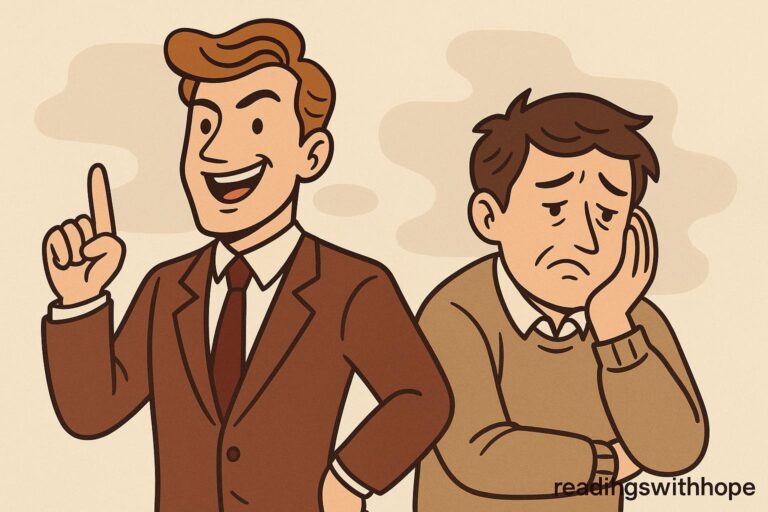
You’ll see it when a patient asks for clarification and the doctor interprets it as a challenge. Instead of curiosity, you get subtle dismissal: “Trust me, this is standard.” What’s happening there isn’t just impatience—it’s a threat response to perceived ego injury.
You’ll see it in multidisciplinary rounds. The narcissistic physician dominates airtime, reframes others’ suggestions as their own refinements, and subtly signals that alternative views are naive. The meeting technically includes collaboration, but functionally it’s a performance.
Other patterns are more strategic:
- Refusal to seek second opinions, especially in ambiguous cases.
- Selective charm upward, hostility downward — warm with department heads, cutting with interns.
- Decision-making driven by reputation risk rather than patient nuance.
- Retaliatory shifts in scheduling or evaluation after being questioned.
- Withholding information to preserve authority asymmetry.
I once observed a case where a senior attending dismissed a resident’s early sepsis concern. The resident was right. When the patient deteriorated, the attending reframed the narrative during M&M to emphasize system delays. No overt lie. Just narrative control. That’s the subtle power of narcissistic cognition—it reorganizes reality to preserve self-image.
The covert version experts often miss
Here’s something I think we under-discuss: covert narcissism in medicine is often more destabilizing than overt grandiosity.
The overtly arrogant physician is easy to spot. The covert narcissist is the one who frames themselves as misunderstood, overburdened, uniquely competent yet tragically unsupported. They cultivate moral superiority rather than dominance.
In practice, this looks like:
- Chronic grievance narratives about incompetent colleagues.
- Excessive defensiveness wrapped in intellectualization.
- Emotional withdrawal when not praised.
- Subtle victim positioning in conflict.
This subtype often thrives in academic environments where intellectual identity is currency. I’ve seen department cultures shift around these personalities because they’re perceived as brilliant but “difficult.” Over time, people adapt to avoid destabilizing them. That adaptation becomes cultural drift.
Confidence versus pathology
We should be careful here. Medicine requires decisiveness. Surgeons can’t second-guess mid-procedure. Emergency physicians can’t crowdsource every call. So how do we distinguish adaptive confidence from maladaptive narcissism?
For me, the clearest differentiator is how the physician responds to uncertainty and error.
Healthy high performers:
- Admit diagnostic ambiguity.
- Seek peer input when appropriate.
- Experience discomfort with mistakes but integrate feedback.
Narcissistic patterns:
- Reframe ambiguity as certainty.
- Interpret feedback as disrespect.
- Protect identity over accuracy.
One cardiologist I interviewed described a colleague who never used the phrase “I don’t know.” That sounds small, but linguistically it matters. The inability to tolerate epistemic humility is a red flag in complex systems.
Institutional reinforcement we don’t talk about enough
We also need to acknowledge that narcissistic traits are often reinforced structurally.
High RVU generators receive behavioral immunity. Surgical “rainmakers” get protected despite turnover in their teams. Academic stars are insulated because they bring grants. Revenue and prestige can function as narcissism amplifiers.
When institutions fail to separate performance metrics from relational accountability, narcissistic behavior becomes adaptive. It’s no longer just a personality issue—it’s a systems design issue.
And here’s the uncomfortable part: sometimes we mistake intimidation for leadership. Teams may report feeling “pushed to excellence” under a domineering physician. But if psychological safety erodes, error reporting drops. We know from safety science what that leads to.
So when we talk about narcissistic doctors, we’re not diagnosing casually. We’re examining a pattern that sits at the intersection of personality psychology, institutional incentives, and patient safety.
And honestly, the more I’ve looked at it, the more convinced I am that this isn’t a fringe issue. It’s woven into the culture in ways we’ve normalized.
What This Does to Patients and Teams
When patient care becomes identity protection
Let’s talk about consequences, because this is where the conversation usually gets uncomfortable.
When a physician’s identity is built on being right, being admired, or being the smartest person in the room, clinical decision-making subtly shifts. Not always dramatically. Often incrementally. But the pattern matters.
One thing I’ve noticed over and over is diagnostic rigidity under ego threat. A patient questions a treatment plan. A family asks about an alternative approach. A consultant offers a different interpretation of imaging. In healthy dynamics, that’s routine. In narcissistic dynamics, it’s destabilizing.
What happens next is rarely overt hostility. It’s more refined:
- The alternative perspective is minimized.
- The questioning party is reframed as “anxious” or “misinformed.”
- The plan becomes more entrenched, not because evidence strengthened, but because identity was challenged.
I’ve seen cases where escalation of treatment occurred faster than clinically necessary, not out of malice, but because backing down would signal fallibility. That’s the part that worries me most. When error avoidance becomes secondary to ego preservation, patient safety quietly erodes.
Shared decision-making under strain
We’ve all worked hard to institutionalize shared decision-making. But narcissistic physicians often perform it rather than practice it.
They present options, yes. But the framing is weighted. Tone signals preference. Risks of the disfavored option are emphasized. Patient autonomy technically exists, but psychologically it’s constrained.
A colleague once described a physician who said, “Of course it’s your choice,” while leaning back with visible irritation when patients asked for time to decide. Over time, patients stopped asking.
It’s subtle. It’s not unethical on paper. But it shifts the power dynamic in ways that affect long-term trust.
The emotional aftershock patients carry
We also underestimate the psychological footprint. Patients don’t just remember outcomes. They remember tone. They remember whether they felt heard.
In chronic illness populations especially, I’ve seen patients describe feeling “managed” rather than treated. They comply. They don’t question. But they disengage emotionally.
Research on patient satisfaction often focuses on communication skills. I’d argue we need to look deeper at empathic authenticity versus performative empathy. Narcissistic physicians can learn scripts. They can say the right phrases. But when empathy is cognitively simulated rather than emotionally attuned, patients feel it.
What happens to teams over time
If you want to see the full impact, don’t just watch the physician. Watch the nurses. Watch the residents.
Teams working under chronically narcissistic leadership tend to show:
- Decreased spontaneous speaking during rounds.
- Shortened consult discussions.
- Increased reliance on backchannel communication.
- Defensive documentation patterns.
I’ve observed residents who pre-edit their questions to avoid triggering defensiveness. That’s not just a personality clash. That’s psychological safety collapse.
And we know from safety science that psychological safety correlates strongly with error reporting. If team members are afraid to challenge authority, near misses go unspoken.
There’s also moral injury. Nurses often describe feeling complicit in care plans they privately question but cannot safely contest. Over time, that erodes professional integrity.
The M&M effect
Let’s talk about morbidity and mortality conferences.
In healthy departments, M&M is uncomfortable but constructive. In narcissistically influenced cultures, it becomes narrative management. Cases are reframed to preserve hierarchy. Language softens around senior physicians. Contributing factors are externalized.
I once attended an M&M where a clear delay in escalation was attributed primarily to “workflow inefficiency.” The attending who made the initial call controlled the framing. Junior staff remained silent.
That’s the systemic cost. It’s not just one difficult personality. It’s how reality bends around them.
Institutional blind spots
Here’s another dynamic experts don’t always name directly: institutions often protect narcissistic physicians if they generate revenue or prestige.
High RVU output. Grant acquisition. Surgical volume. These metrics become shields. Complaints are reframed as “communication style differences.”
Over time, organizations unconsciously trade relational stability for financial or reputational gain. That trade has long-term costs—turnover, burnout, malpractice risk—but they’re diffuse and harder to quantify.
So narcissism in medicine isn’t just a personality issue. It’s an ecosystem issue. And ecosystems adapt around power.
How to Deal With Narcissistic Doctors
If you’re a patient navigating this dynamic
Let’s start with patients, because they have the least structural power.
If a patient suspects narcissistic dynamics, the goal isn’t confrontation. It’s strategy.
Some approaches that work:
- Use structured communication. “I have three questions about this plan” creates boundaries.
- Ask for written summaries of treatment recommendations.
- Bring an advocate to appointments, especially for complex decisions.
- Frame second opinions as standard diligence, not distrust.
- Document interactions calmly and factually.
Patients shouldn’t have to manage physician egos. But realistically, some do. Structured clarity reduces the emotional friction.
If you’re a colleague or team member
This is harder. You can’t just transfer care.
Direct ego confrontation rarely works. Narcissistic personalities experience public challenge as humiliation, which escalates defensiveness.
More effective approaches tend to include:
- Frame feedback around patient outcomes and metrics, not personal behavior.
- Use data rather than subjective impressions.
- Deliver critique privately, not in group settings.
- Build peer coalitions so concerns aren’t isolated.
- Keep documentation neutral and precise.
I’ve seen department chairs successfully manage high-narcissism surgeons by tying behavioral expectations directly to leadership privileges. When privileges depend on collaborative behavior, incentives shift.
But here’s the reality: not every culture supports this. In some settings, containment strategies are the only viable option.
If you’re in leadership
Leadership is where real leverage exists.
Evidence-informed strategies include:
- 360-degree evaluations that incorporate nursing and trainee input.
- Clear behavioral thresholds tied to advancement.
- Anonymous reporting channels with genuine follow-up.
- Separating revenue performance from behavioral immunity.
- Executive coaching focused on interpersonal regulation.
I’ve seen executive coaching help when narcissistic traits are subclinical and insight is possible. But entrenched NPD patterns rarely shift meaningfully without long-term psychotherapy, and even then progress is uneven.
Leaders also need to model vulnerability themselves. If department heads never admit uncertainty, they normalize ego defense.
Can change actually happen?
Here’s the honest answer: sometimes.
High-trait narcissistic physicians who retain some reflective capacity can adjust behavior when incentives shift. They may not become empathic overnight, but they can learn containment.
Deeply entrenched narcissistic personality disorder is more resistant. The core issue isn’t skill deficit. It’s identity fragility.
So the practical goal often isn’t personality transformation. It’s boundary enforcement and cultural protection.
And I think that’s an important reframe. We don’t have to cure narcissism to reduce its harm. We can design systems that don’t reward it.
Final Thoughts
Narcissistic doctors aren’t fictional villains. Many are competent, driven, even lifesaving clinicians. The issue isn’t brilliance. It’s what happens when identity protection overrides relational and clinical humility.
If we’re serious about patient safety and team sustainability, we have to be willing to examine how personality and power interact in medicine. Not with moral outrage. With clarity.
Because the culture we tolerate is the culture we reproduce.