How Being in a Relationship With a Narcissist Breaks You?
If you’ve ever worked with clients who’ve been in relationships with narcissists, you know this isn’t just about bruised egos or bad breakups.
It’s deeper—it’s structural.
What fascinates me (and honestly still surprises me) is how invisible the damage can be at first. On the surface, things might look fine—charming partner, seemingly balanced dynamic—but over time, there’s this quiet dismantling of the self that unfolds in layers.
We’re not just talking about manipulation here. We’re talking about a long-term psychological remodeling, where the victim’s internal narrative is slowly rewritten. I had a client once who kept saying, “I don’t even know what I want anymore—I wait for his reaction to decide.”
That hit me. The loss of self-agency wasn’t just emotional, it was cognitive.
This article digs into how that happens—not just what it looks like.
You might already know the general terrain, but I want to zoom in on the mechanics: the micro-patterns of gaslighting, the way trauma bonding mimics secure attachment, the identity erosion masked as compromise. I think there’s more here for all of us to unpack.
Let’s get into it.
The Start of Cognitive and Emotional Fragmentation
One of the most chilling things I’ve seen in narcissistic relationships is how predictably the survivor’s sense of reality starts to fracture—while they still think they’re “choosing” to stay. It’s not just about emotional abuse.
It’s about how the narcissist systematically destabilizes the survivor’s mind, and that destabilization becomes internalized. You’ll hear things like, “Maybe I’m overreacting,” or “I just don’t trust my memory anymore.”
That’s not a communication issue—it’s cognitive distortion by design.
Gaslighting isn’t just occasional lying—it’s chronic narrative hijacking. The narcissist doesn’t just dispute facts; they reshape meaning. A simple disagreement turns into, “You’re too sensitive,” or “That never happened.”
Over time, the survivor begins to outsource their reality-checking to the abuser.
One of my clients journaled daily just to remind herself of what was real. And even then, she questioned her own words.
Then there’s trauma bonding, which is often misunderstood—even among clinicians.
It’s not just the “highs and lows.” It’s intermittent reinforcement that mimics attachment security, especially for those with early attachment wounds.
The same brain circuits involved in addiction are lighting up. That moment when the narcissist is suddenly kind again?
It’s dopaminergic reward. That’s not romance—it’s a behavioral trap.
Emotionally, survivors often live in a state of hypervigilant ambiguity. They’re constantly scanning: Will this be one of the good days? Did I say too much?
Did I smile wrong? I had a client describe it as “emotional duck-and-cover”—always waiting for the next shift in mood. Over time, this wears down the capacity to self-regulate, especially around anger, grief, or shame.
And here’s something I think we need to talk about more: the narcissist’s use of mirroring early in the relationship.
It creates a false sense of soulmate-level connection. Survivors don’t just lose a partner when the abuse begins—they lose the person they thought understood them. That sense of betrayal is deeper than just loss—it’s identity shattering.
So, by the time they come to us, we’re not just helping them “leave” or “heal.” We’re helping them rebuild an entire internal framework—how they think, feel, and know themselves. And that is no small thing.
Signs of Breakdown in a Narcissistic Relationship
Alright, let’s get into the nuts and bolts of how narcissistic abuse systematically breaks down a person’s sense of self. This isn’t just emotional exhaustion or confusion.
This is deep structural erosion of identity, autonomy, and internal authority. What’s wild is how methodical it is—almost like psychological architecture being dismantled brick by brick.
Here’s a breakdown of the key mechanisms I’ve seen play out again and again in clients who’ve been in long-term narcissistic relationships:
1. Chronic Devaluation and Idealization (The Identity Rollercoaster)
Let’s start with the classic: the idealize–devalue–discard cycle. It’s been written about a ton, but what we often overlook is how repeated exposure to this loop reshapes the survivor’s internal narrative.
You’re either pedestalized or erased, and eventually, you internalize that split: “I’m either perfect or worthless.”
A client once told me, “When he loved me, I felt like I could breathe again. When he pulled away, I didn’t know who I was.” That’s not poetic—it’s identity dependency.
Over time, your sense of self becomes contingent on how the narcissist sees you in that moment.
The psychological whiplash is exhausting—and effective. It erodes the ability to hold a stable, internalized sense of worth.
2. Enmeshment and Control (Loss of Boundaries as a Survival Strategy)
In healthy relationships, boundaries are where two selves meet. In narcissistic ones, boundaries are slowly, subtly eroded until they barely exist.
At first, it feels like intimacy—“We’re so close, we don’t need space”—but that closeness quickly becomes a form of surveillance and control.
And the survivor often adapts by merging. Not because they’re weak, but because that’s the path of least resistance.
I’ve had clients say, “It was easier to just agree, to become what he needed me to be.” That’s fawn response territory—a survival strategy misread as complicity.
The narcissist isn’t just controlling behavior—they’re shaping identity. And once the self becomes conditional, autonomy dissolves.
3. Isolation from Social Support (The Slow Burn of Disconnection)
One of the most underappreciated tactics narcissists use is strategic isolation. Not dramatic “cut them off” moves—no, this is way more subtle.
It’s:
- “Your friends don’t really get us.”
- “Your mom’s kind of toxic, don’t you think?”
- “They just make you doubt yourself.”
And just like that, support systems go quiet. Not gone—but muted. Survivors start filtering their stories before sharing them. They start questioning their own reality even in safe spaces, because the narcissist’s voice is always echoing in their heads: “No one else sees what we have.”
Over time, the external reality check vanishes, and with it, a core part of identity maintenance—relational mirroring.
4. Forced Adaptation (Shapeshifting for Safety)
This is one I see all the time.
Survivors often become expert-level emotional contortionists.
They read the room, the mood, the body language—anything to stay one step ahead. They learn that being predictable means being safe, even if it means completely abandoning their own preferences, needs, or opinions.
A client once described it like this: “I could tell by the way he shut the door what kind of day it was going to be—and I’d shift everything accordingly.” That’s not intuition. That’s chronic survival adaptation.
But here’s the thing: adaptation becomes identity. After a while, you don’t remember who you were before you had to keep adjusting. Your personality becomes a performance you’re constantly editing based on someone else’s script.
5. Internalized Guilt and Shame (The Invisible Cage)
If there’s one emotional currency narcissists trade in most, it’s shame. Not overt humiliation (though that happens too), but subtle, cumulative, relational shame.
The kind that makes survivors feel fundamentally flawed for having needs, setting boundaries, or even having a bad day.
The result?
A deep, almost reflexive sense of guilt for existing imperfectly.
Survivors start apologizing for things they didn’t do, over-explaining, self-silencing.
Why? Because they’ve been taught—sometimes explicitly—that their emotions are too much, their needs are inconvenient, and their reactions are “crazy.”
This isn’t just about losing confidence. It’s about internalizing the narcissist’s voice as your own inner critic. It becomes a loop:
- “I shouldn’t have said that.”
- “Why can’t I just let things go?”
- “I probably made it worse.”
By the time they leave the relationship, many survivors are fighting with a version of the narcissist that still lives in their head. That’s how deep this goes.
So what does all of this add up to?
By the end of a narcissistic relationship, the survivor hasn’t just lost a partner—they’ve often lost themselves.
Their thoughts aren’t fully theirs. Their feelings are filtered. Their intuition is muted. And their capacity to act independently?
Compromised at every level.
What we’re seeing here isn’t “codependency” or “low self-esteem” (those terms can be so reductive). We’re seeing relational trauma at the level of identity. The kind that requires not just healing—but reconstruction.
And as clinicians, we need to track this. Not just the symptoms, but the mechanisms. Because if we can name the process, we can help survivors begin to reverse it—one piece of reclaimed self at a time.
Long-Term Psychological Consequences
By the time a survivor exits a narcissistic relationship—if they manage to at all—they’re often not walking away from a person, but crawling out of a psychological warzone.
And what’s left behind isn’t just pain. It’s confusion, identity loss, emotional chaos, and in many cases, symptoms that mirror or meet the criteria for Complex PTSD.
Let’s talk about the aftermath, because this is where the long tail of narcissistic abuse really shows itself.
The Internal Landscape: Fragmented, Frozen, and Foggy
Survivors often describe themselves as feeling empty, numb, or unreal. Not because they’re depressed (though many are), but because their emotional bandwidth has been hijacked for so long, it just flatlines. Joy feels suspicious. Sadness feels dangerous. Anger feels… inaccessible.
I had a client say, “I’m scared to feel anything too strongly. Because I used to be punished for that.” That’s emotional suppression—not as a coping mechanism, but as a learned safety protocol.
You’ll also hear about “brain fog,” but it’s not just stress-related—it’s a symptom of chronic gaslighting and cognitive overload. When you’ve spent months or years second-guessing your memory, your perception, and your instincts, it’s no wonder your mind starts short-circuiting.
Cognitive disorganization becomes a form of protection. If you don’t trust yourself, your brain stops offering up information that might get you hurt.
Physiological Fallout: When the Body Remembers
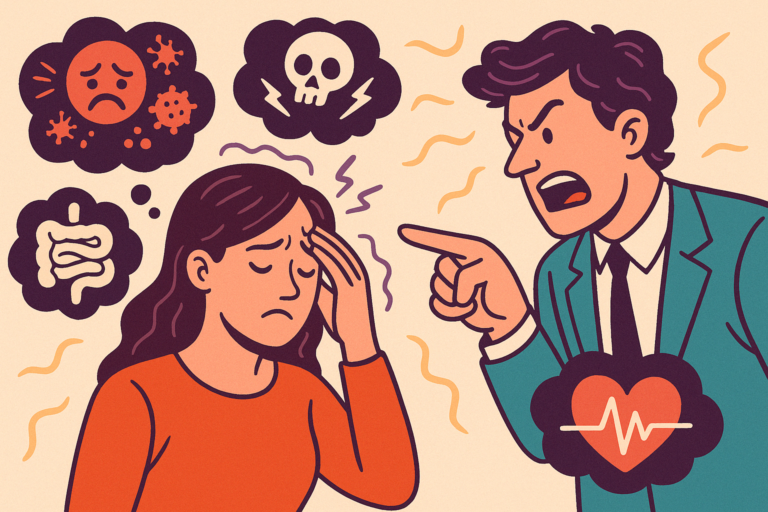
We can’t ignore what happens in the body. Narcissistic abuse isn’t just psychological—it’s somatic.
Many survivors live in a state of chronic hyperarousal or shutdown, depending on where they sit in their trauma response. Insomnia, gut issues, chronic pain, fatigue—these aren’t coincidences. They’re the body’s way of carrying the weight of sustained threat.
You’ll also see dysregulated affect, particularly with shame and fear. The nervous system has been so trained to respond to subtle cues of danger (a raised eyebrow, a text with a period instead of a smiley face) that minor triggers spark major responses.
Relational Aftershocks: The Trust Problem
Here’s the kicker: even when survivors know the relationship was abusive, they often struggle to fully trust non-abusive people. Why? Because the narcissist didn’t just violate their boundaries—they reprogrammed what “safe” feels like.
Healthy people may feel “boring,” or emotionally unavailable. Survivors may even unconsciously recreate the narcissistic dynamic, not out of masochism, but because it’s familiar.
Their nervous system has equated intensity with love, inconsistency with passion, and control with care.
And this bleeds into therapeutic work too. Survivors often test the therapeutic alliance: “Will you invalidate me? Will you turn on me?” It’s not resistance—it’s protective mistrust.
And if we don’t hold space for that with attunement and patience, we risk replicating the damage they came in with.
Most Common Clinical Presentations
Let’s break it down. You’ll often see:
- C-PTSD (emotional flashbacks, self-doubt, derealization, etc.)
- Generalized Anxiety & Panic (especially relational anxiety)
- Major Depressive Episodes (especially post-discard)
- Disordered eating or substance use (as numbing tools)
- Attachment dysregulation (clingy/avoidant cycles, idealization of others)
- Deep existential confusion (“Who am I now that I’m not trying to survive?”)
TL;DR
- Narcissistic abuse is a slow, sophisticated process that systematically dismantles a person’s reality, identity, and autonomy.
- Survivors don’t just “struggle with boundaries”—they’ve had them reprogrammed and punished out of existence.
- The long-term effects aren’t just emotional scars. They’re neurobiological imprints of chronic relational trauma.
- Healing isn’t about “moving on”—it’s about reclaiming internal authority, learning to trust your perception again, and slowly rebuilding a self that never got to fully exist.