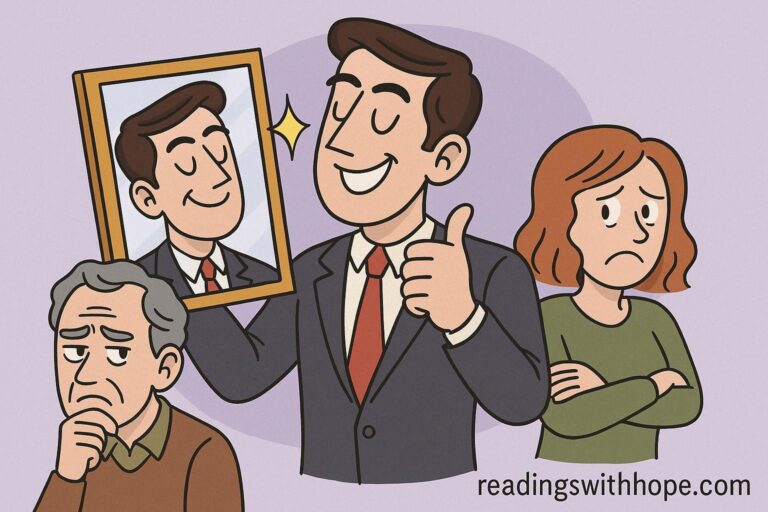
Blocking the Narcissist on Social Media Is It a Wise Thing To Do
If you’ve worked with survivors of narcissistic abuse for any length of time, you’ve probably heard this question dozens of times: “Should I block them?” On the surface, it sounds trivial. It’s just a button. But we both know it’s not just a button. It’s a boundary, a signal, sometimes even a declaration of war.
What fascinates me is how often blocking gets framed as either obviously empowering or obviously reactive. I don’t think it’s either. Blocking is a psychologically loaded act in a space designed to reward visibility, access, and emotional reactivity. When we talk about it with clients—or colleagues—we’re really talking about control, narcissistic supply, trauma bonds, and the architecture of digital platforms. So let’s unpack what’s actually happening beneath that seemingly simple click.
How Narcissism Plays Out Online
Social media as a supply machine
I’ll say this bluntly: social media is one of the most efficient narcissistic supply systems ever invented. Not because narcissists are uniquely drawn to it—but because the platforms themselves are engineered around validation metrics.
For someone with strong narcissistic traits, the structure of social media does three critical things:
- It quantifies attention.
- It amplifies curated identity.
- It ensures constant access to audience feedback.
Likes, views, comments—these aren’t just vanity metrics. They’re micro-doses of affirmation. The intermittent reinforcement schedule is nearly perfect. And we know from behavioral psychology that intermittent reinforcement is incredibly sticky.
But here’s what I think often gets overlooked: it’s not just about public validation. It’s about ambient access to former supply sources. Even if there’s no direct contact, the narcissistic individual can still monitor a former partner’s emotional state, new relationships, lifestyle changes, or signs of recovery.
That kind of ambient awareness sustains psychological leverage.
I’ve seen this repeatedly in clinical narratives. A client leaves a narcissistic partner. There’s no texting, no calls. But the narcissist watches every story. Views every update within minutes. Never engages directly. Just watches. And the client feels it. Hypervigilance spikes. Rumination increases. The trauma bond remains activated.
Observation alone becomes a form of control.
Control and narrative management
One thing I’ve grown more curious about over the years is how social media enables narrative preemption. Narcissistic individuals often attempt to control not just relationships—but stories.
Online spaces make that easier than ever.
Consider this pattern: after a breakup, the narcissistic individual rapidly posts curated images of thriving—new partner, gym progress, inspirational quotes about “growth” and “moving on.” Meanwhile, mutual contacts absorb a carefully crafted storyline. The subtext is clear: I’m stable. I’m strong. I’m the reasonable one.
When the former partner blocks them, that act can be reframed publicly. “I don’t know why I’m being cut off. I just want peace.” The block becomes evidence within a manufactured victim narrative.
Blocking disrupts access, yes—but it also removes the narcissist’s ability to directly surveil and adjust their strategy. That’s significant. Because many narcissistic dynamics rely on feedback loops. If they can see you’re struggling, they escalate. If they see you thriving, they may attempt hoovering. Social media gives them real-time data.
Remove the data stream, and you increase uncertainty.
And uncertainty is uncomfortable for individuals who rely heavily on control.
What being blocked really triggers
Let’s talk about narcissistic injury. Not in abstract DSM language—but in lived experience.
Blocking communicates three psychologically potent messages:
- You no longer have access to me.
- I control the boundary.
- Your visibility in my world is revoked.
For someone organized around entitlement and dominance, that’s destabilizing. I’ve observed two broad patterns of response.
The grandiose-leaning individual often externalizes immediately. Retaliatory posts. Subtle digs. Smear campaigns. Sometimes even creating alternate accounts to regain visibility. The block is interpreted as an ego threat—so dominance must be reasserted.
The more vulnerable-leaning individual may pivot to self-victimization. Public expressions of confusion. Indirect messages through mutual contacts. “I guess I’m just that disposable.” The goal isn’t dominance through aggression, but through guilt induction.
And in more malignant presentations, the block can trigger escalation outside the platform—showing up physically, contacting family members, weaponizing legal systems.
This is why I resist simplistic advice like “Just block them and move on.” Blocking is not a neutral act in a narcissistic dynamic. It’s a boundary assertion that can function as both protection and provocation.
We also need to consider the attachment overlay. Many survivors are still trauma bonded when they block. The act isn’t always rooted in calm boundary clarity. Sometimes it’s reactive—a spike of anger after seeing the narcissist post with a new partner. When blocking happens in a dysregulated state, it can unintentionally intensify the cycle. The narcissist senses the emotional charge.
I’ve found it helpful to think of blocking as a strategic intervention rather than an emotional reaction. The question isn’t “Is blocking good or bad?” The real question is: What function will this boundary serve in this specific relational ecosystem?
Because digital space isn’t neutral territory. It’s an arena where supply, status, surveillance, and identity are constantly negotiated.
And when we understand that, the decision to block stops being about social media etiquette—and starts being about psychological strategy.
When Blocking Actually Helps
Let me be clear: I’m not anti-blocking. In many cases, I actively recommend it. But I don’t recommend it reflexively. I recommend it when I’m convinced it will disrupt the reinforcement cycle more than it will inflame it.
The key distinction I keep coming back to is this: Is the block going to reduce psychological access in a meaningful way? If the answer is yes, then it’s often adaptive.
Situations where blocking tends to work in your favor
There are specific relational contexts where blocking does more good than harm:
- Post-escape from coercive or psychologically controlling dynamics
When the survivor has already endured cycles of idealization, devaluation, and intermittent hoovering, any remaining digital access becomes a vulnerability. Blocking removes an easy pathway for re-engagement. - When hoovering is active and escalating
Repeated “accidental” likes, nostalgic messages, cryptic posts clearly aimed at the former partner—this is supply-seeking behavior. Blocking cuts off a predictable entry point. - When the survivor is compulsively monitoring the narcissist
This one is huge and often overlooked. Blocking isn’t just about stopping them from seeing you. It’s about stopping you from seeing them. If a client is checking their ex’s profile ten times a day, we’re looking at trauma bond reinforcement. Blocking interrupts the dopamine loop. - When social media exposure is triggering dysregulation
Seeing curated happiness with a new partner. Seeing public admiration. Seeing the narcissist “thriving.” For a trauma-bonded nervous system, that can activate shame, comparison, and self-doubt. Blocking reduces exposure to those triggers. - When narrative manipulation is ongoing
If the narcissist is subtly using posts to provoke, triangulate, or smear, blocking removes the audience they’re targeting.
In these contexts, blocking is less about punishment and more about nervous system stabilization.
The psychological benefits we don’t talk about enough
Blocking can function as a micro-ritual of agency. And for survivors whose autonomy has been eroded, that matters.
I’ve seen clients describe the moment of blocking as physically grounding. Not dramatic. Not explosive. Just a quiet reclaiming of control. It restores directional flow: I decide who has access to me.
There are deeper mechanisms at play too:
- It reduces anticipatory anxiety. No more waiting to see if they viewed your story.
- It decreases rumination fuel. Fewer visual cues, fewer narrative triggers.
- It weakens intermittent reinforcement. No random likes. No surprise messages.
- It supports cognitive restructuring. The brain gets fewer reminders of the attachment figure.
From a neurobiological standpoint, we’re reducing stimulus exposure tied to emotional memory encoding. That’s not trivial. That’s strategic.
I sometimes frame blocking as environmental design. If you know a slot machine is addictive, you don’t practice willpower in front of it. You remove access to the machine. Social media visibility can function the same way in trauma-bonded dynamics.
When alternatives make more sense
That said, full blocking isn’t always the smartest move. There are situations where I recommend modified digital boundaries instead.
- Muting without blocking
This is useful when escalation risk is high. The narcissist doesn’t receive a clear ego injury signal, but the survivor reduces exposure. - Restricting visibility settings
Limiting story views or audience settings can quietly reduce access without triggering retaliatory behavior. - Grey rock in shared spaces
In professional or co-parenting contexts, blocking may be impractical. Strategic neutrality becomes the boundary. - Parallel communication channels
In custody situations, shifting communication to structured platforms creates accountability while limiting emotional contact.
The question becomes less “Should I block?” and more “What configuration of boundaries best disrupts the dynamic without increasing danger?”
I want us, as experts, to move away from moralizing the block. It’s not about maturity. It’s about function.
If blocking meaningfully reduces supply and stabilizes the survivor’s nervous system, it’s wise. If it predictably escalates retaliation without reducing psychological entanglement, we need a different tool.
When Blocking Can Make Things Worse
Now let’s talk about the uncomfortable side. There are cases where blocking doesn’t de-escalate—it accelerates.
I’ve seen this most clearly in individuals with pronounced entitlement combined with poor impulse control. For them, blocking isn’t simply a boundary. It’s a humiliation.
High-risk situations to take seriously
Certain dynamics demand caution:
- History of stalking or obsessive pursuit
If the individual has previously shown up uninvited, created fake accounts, or monitored obsessively, blocking may intensify the pursuit. - Explosive rage responses to rejection
If prior breakups triggered verbal aggression, property damage, or harassment, a digital cut-off may be interpreted as a dominance challenge. - Shared custody or legal entanglement
Blocking in these contexts can complicate communication or provoke legal maneuvering framed as “parental alienation.” - Tightly interwoven social networks
When professional or community overlap is high, blocking can trigger indirect smear campaigns. - Existing threats or intimidation tactics
If legal, financial, or reputational leverage has been used before, escalation risk rises.
In these cases, we have to think in systems, not impulses.
Escalation patterns I’ve observed
When blocking injures the narcissistic ego, a few predictable responses often unfold:
- Creation of alternate accounts to regain surveillance.
- Increased indirect messaging through mutual contacts.
- Public reframing as the victim of “immaturity” or “cruelty.”
- Rapid relationship displays to provoke jealousy.
- Escalation into harassment outside the platform.
And here’s something I find particularly interesting: sometimes blocking increases obsession precisely because it introduces uncertainty. The narcissist no longer has data. No story views. No posts. No emotional cues. That ambiguity can drive compensatory attempts to reassert control.
Loss of visibility can feel like loss of dominance.
For individuals with more malignant traits, this can move beyond annoyance into punitive action. I’ve consulted on cases where blocking preceded workplace complaints, coordinated smear efforts, or threats of legal action. Not because blocking is wrong—but because it struck at perceived entitlement.
The strategic lens we need
So what do we do with that complexity?
We conduct risk assessment before recommending blocking. Not just emotional readiness—but behavioral history. Has this person respected boundaries before? How have they responded to perceived rejection? Is there a documented pattern of escalation?
I also look at the survivor’s internal state. If the block is being used as an emotional spike—“I’ll show them”—we may be inadvertently feeding the drama cycle. If it’s being used as a grounded boundary within a broader no-contact strategy, it’s different.
I sometimes suggest staged disengagement. Reduce visibility first. Document problematic behavior. Strengthen support systems. Then block when prepared for potential backlash.
We can’t ignore power dynamics either. Financial dependence, shared assets, immigration status, community reputation—these all factor into how risky a visible boundary might be.
Blocking is not inherently provocative. But in certain personality structures, any boundary is provocative.
That’s why I resist universal prescriptions. Blocking is a tool. Tools require context.
Final Thoughts
If there’s one thing I hope we carry forward, it’s this: blocking a narcissist on social media isn’t about etiquette or pettiness. It’s about power, access, and psychological leverage in a digitally mediated world.
Sometimes it’s the cleanest cut. Sometimes it’s a spark in dry grass.
Our job isn’t to glorify or condemn it. It’s to evaluate the relational system, the personality structure involved, the survivor’s nervous system state, and the real-world risk factors.
And when we do that carefully, the “block” button stops being reactive. It becomes intentional.