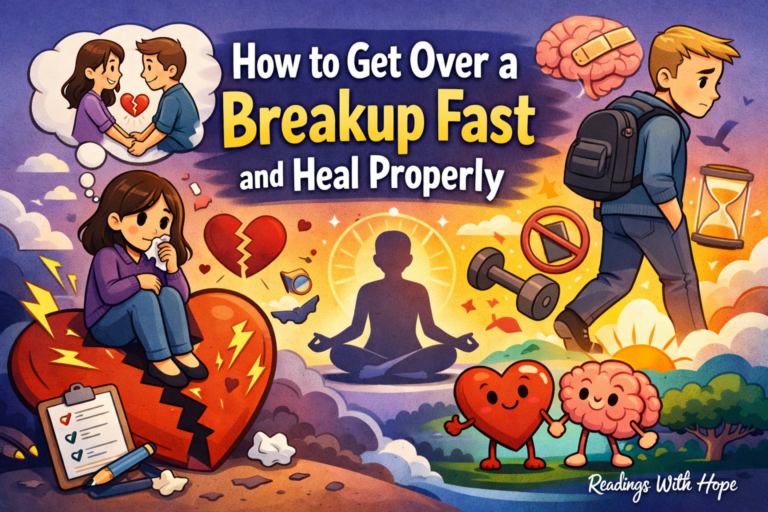
Stages of Emotional Healing After a Breakup
When we talk about breakups, we often default to the language of grief, but I think that framing is too blunt to capture what’s actually happening.
In my experience—both personal and professional—a breakup functions less like a loss of an object and more like a sudden destabilization of an attachment system that was quietly doing a lot of regulatory work. That distinction matters. It explains why people who “know better,” who can articulate attachment theory and emotional regulation with ease, still find themselves blindsided by intensity they didn’t expect.
I’m using stages here deliberately, but not in the tidy, linear sense that makes experts roll their eyes. Think of them as recurring patterns of nervous system and meaning-level responses that tend to show up after an attachment bond is severed. The value isn’t in labeling where someone is, but in understanding what their system is trying to solve at any given moment. Once you see that, a lot of “maladaptive” behavior starts to look surprisingly coherent.
The Shock to the System
When attachment suddenly loses its anchor
Let’s start with the part that most people underestimate, especially those of us steeped in theory. The early phase after a breakup isn’t primarily emotional—it’s physiological and relational. When an attachment bond ends, the system doesn’t register “this relationship is over.” It registers “a primary regulation source has gone offline.” That’s a very different alarm.
I’ve seen highly self-aware clients—and yes, I’ve caught myself here too—say things like, “I don’t even miss them that much, so why do I feel unhinged?” This is where attachment shock comes in. The distress isn’t always about longing. It’s about the sudden absence of predictability, co-regulation, and future orientation that the relationship was quietly providing.
Neurobiologically, we’re watching a system that was calibrated around another person scramble to recalibrate solo. Sleep fragments. Appetite goes sideways. The mind starts scanning for threat or meaning, often both at once. This isn’t emotional immaturity—it’s the cost of having bonded deeply.
Why intensity spikes even when the breakup was “right”
One of the more counterintuitive patterns I keep noticing is that emotional intensity doesn’t reliably correlate with how “bad” or “good” the relationship was. I’ve watched people exit objectively misaligned relationships and still experience profound dysregulation. That confuses them. It shouldn’t.
Attachment systems don’t optimize for happiness; they optimize for continuity. So when a bond ends—even a necessary one—the system treats it as a survival-level disruption. That’s why people can feel panic, grief, or obsessive thinking even while intellectually agreeing the breakup was inevitable.
A concrete example: someone leaves a chronically avoidant partner. On paper, relief should dominate. Instead, they find themselves compulsively replaying conversations or fantasizing about repair. What’s happening isn’t regression; it’s the attachment system attempting to reestablish equilibrium by any means available. Rumination, protest behaviors, and sudden idealization are all tools the system reaches for under threat.
Emotional volatility as stabilization, not collapse
Here’s a reframe I wish more experts would lean into: early post-breakup volatility is often a stabilization attempt, not a breakdown. Mood swings, contradictory desires (“I want them back” followed by “I never want to see them again”), and heightened sensitivity are signs of a system searching for a new baseline.
The problem is that culturally—and sometimes clinically—we pathologize this phase. We rush people toward “acceptance” or “closure” as if intensity itself is the enemy. In practice, premature cognitive reframing can actually delay regulation. I’ve seen clients who could perfectly explain why the relationship ended but still had bodies that hadn’t caught up to that narrative.
This is where expertise can become a liability. When you know the models, there’s a temptation to out-think the experience. But attachment shock doesn’t resolve through insight alone. It resolves through repeated experiences of safety, predictability, and self-regulation without the former partner.
What not to rush past
One last thing I’ll underline here: trying to fast-forward this stage often backfires. Jumping into new relationships, overworking, or aggressively “self-improving” can all function as avoidance dressed up as growth. Sometimes the most stabilizing move is allowing the system to feel temporarily disoriented while gently rebuilding internal and external supports.
If there’s a takeaway from this stage, it’s this: early breakup pain is not evidence that someone is broken—it’s evidence that something mattered. And systems that cared deeply take time to stand back up.
Making Meaning of What Happened
Anger, stories, and the fight to make sense of the loss
This is the stage where things get interesting—and messy in a way that experts often underestimate. Once the initial attachment shock settles just enough for the nervous system to breathe, the mind steps in with a very human demand: “What exactly happened here?” Not emotionally. Narratively.
This phase isn’t about feeling less. It’s about organizing meaning. And meaning-making after a breakup is rarely neutral. It’s charged, moralized, and often fueled by anger. That’s not a flaw; it’s a feature.
Anger tends to show up here not because someone is “stuck,” but because anger is one of the few emotions that restores a sense of agency after relational loss. When attachment collapses, people often feel small, confused, or erased. Anger pushes back against that. It says, “I mattered. Something went wrong.”
Where this gets tricky is that not all anger is doing the same job. I’ve seen clients—and myself, if I’m honest—cling to anger that feels righteous but is actually defensive. It keeps the self intact by freezing the other person into a single story: villain, betrayer, emotionally unavailable archetype. That story stabilizes identity in the short term, but it limits integration in the long term.
The quiet work of narrative reorganization
What’s actually happening underneath is memory reconsolidation. Every time someone revisits the relationship—through anger, grief, or obsessive replay—the brain is subtly updating emotional memory. This is why breakups don’t heal just by time passing. They heal through repeated, emotionally charged reprocessing with new context.
Here’s a concrete example I see often: someone fixates on a specific betrayal or rupture. At first, the memory is sharp and activating. Over time, if integration is happening, the same memory starts to feel broader. It gets contextualized—by earlier warning signs, by mutual dynamics, by a clearer view of who each person was capable of being. The emotional charge decreases not because the event is minimized, but because it’s been fully metabolized.
Experts sometimes frame this as “cognitive reframing,” but that undersells the emotional labor involved. This isn’t about telling yourself a nicer story. It’s about tolerating complexity long enough for the story to evolve on its own.
When insight outpaces emotional integration
A common pitfall in this stage—especially for highly reflective people—is arriving at insight too quickly. I’ve worked with people who can explain their relational patterns flawlessly but still feel hijacked by resentment or longing months later. That gap isn’t a failure of understanding; it’s a timing issue.
Emotional systems don’t update on explanation alone. They update through corrective emotional experiences. For example, someone may intellectually accept that their partner couldn’t meet their needs, but until they experience being emotionally met elsewhere—or by themselves—that belief won’t fully land.
This is where anger sometimes lingers longer than expected. Not because the person is bitter, but because the system hasn’t yet received proof that vulnerability won’t always lead to abandonment or misattunement.
Identity repair and boundary reconstruction
Another under-discussed task of this stage is identity repair. Relationships subtly shape who we are—our routines, our self-concept, even our moral orientation. When a relationship ends, especially a long or intense one, there’s often a quiet question underneath the anger: “Who am I now that this version of me isn’t needed?”
This is why people sometimes feel destabilized even after making sense of the breakup. The narrative is clearer, but the self is still reorganizing. Boundaries that were once relational now need to become internal. Values that were negotiated now need to stand alone.
This work is slow, unglamorous, and deeply personal. But it’s also where real differentiation begins—not the defensive kind, but the grounded kind that can hold closeness without collapse.
Learning to Stand on Your Own Again
Integration instead of erasure
By the time people enter this phase, they’re often surprised by how ordinary it feels. There’s no dramatic breakthrough moment. No sudden emotional neutrality. Instead, there’s a quiet shift: the relationship stops demanding attention.
That’s integration. Not forgetting. Not excusing. Just no longer being pulled into the past against your will.
A good marker here isn’t the absence of emotion, but the absence of urgency. Memories can arise without hijacking the body. Thoughts about the ex don’t require action. There’s space between stimulus and response again.
I like to emphasize this because many people think healing means indifference. It doesn’t. It means the bond has been fully reclassified by the nervous system—from active attachment to completed experience.
Rebuilding autonomy without isolation
One of the subtler challenges in this stage is relearning autonomy without swinging into emotional isolation. After a breakup, especially one that hurt deeply, independence can become armor. “I don’t need anyone” feels safer than “I can attach again and survive if it ends.”
True integration supports something more nuanced: interdependence with boundaries. The ability to want closeness without grasping, and to tolerate distance without panic.
I’ve seen this show up in small, telling ways. Someone notices they enjoy solitude without it feeling lonely. Or they start dating again without scanning for reassurance. Or they can imagine a future partner without unconsciously comparing them to the past one.
These are not personality changes. They’re nervous system updates.
Desire without reenactment
Another important shift here is how desire functions. Earlier stages are often marked by reenactment—seeking familiar dynamics, chasing emotional intensity, or avoiding vulnerability altogether. As integration deepens, desire becomes quieter and more selective.
People start wanting connection that feels regulating rather than consuming. Chemistry still matters, but it’s no longer the sole compass. There’s room for curiosity instead of compulsion.
This is where I see real post-breakup growth—not as self-improvement, but as increased tolerance for emotional complexity. The system learns it can survive loss without closing down or clinging harder next time.
The relationship finds its place
Eventually, the relationship becomes part of personal history rather than an open loop. It informs preferences, boundaries, and values, but it doesn’t define identity.
I often tell clients: if you can speak about the relationship with honesty and softness—toward yourself most of all—you’re probably further along than you think. That doesn’t mean there’s no sadness. It means the sadness has context and proportion.
This stage isn’t about being “over it.” It’s about being with it, without being run by it.
Final Thoughts
If there’s one thing I hope experts take away from this model, it’s that breakup healing isn’t about speed or emotional control. It’s about respecting what attachment systems actually need to recalibrate.
Pain after a breakup isn’t a sign that something went wrong—it’s a sign that something mattered. And when we stop trying to shortcut that process, we often find that healing unfolds with more intelligence, and more kindness, than we expected.